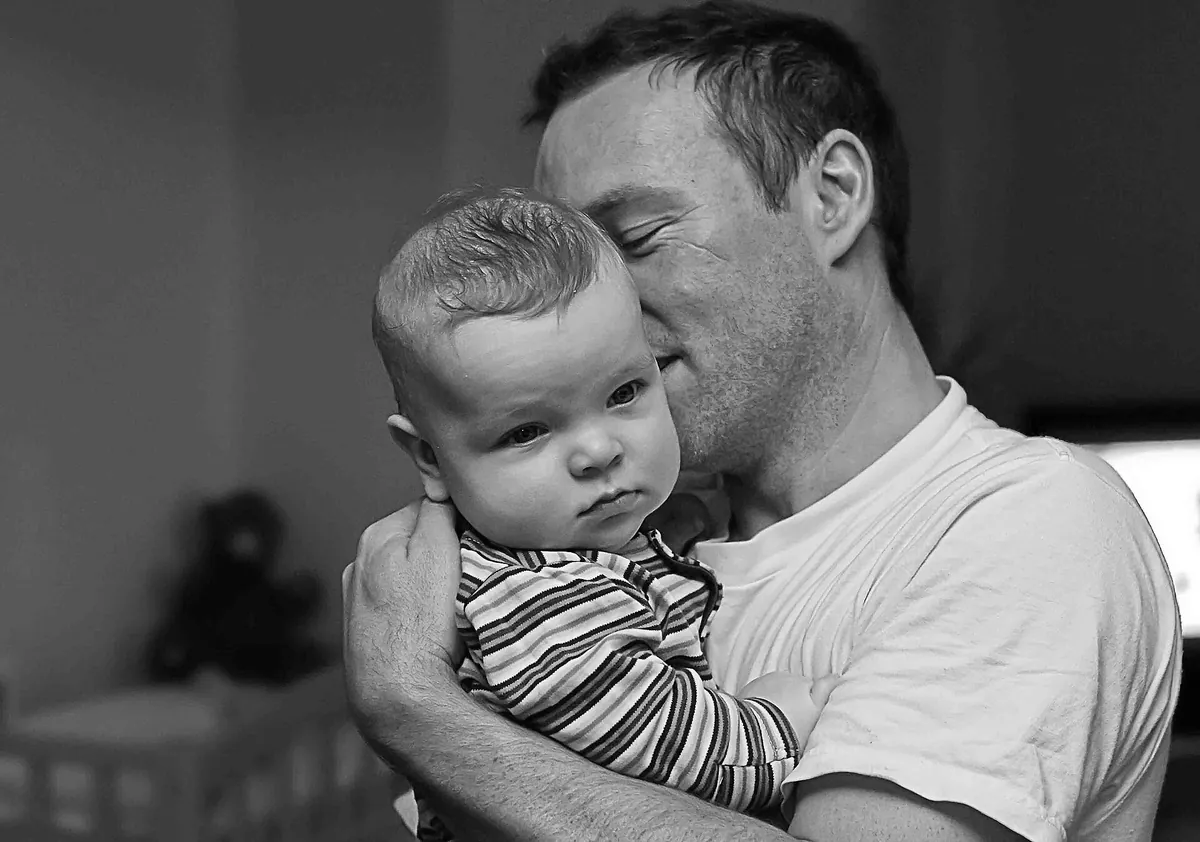
Dad Guilt Is Real. Here's What to Actually Do About It.
Dad guilt, for me, has a sound. It's the sound of a three-year-old yelling "Daddy, NO" through a closed front door at 7:42 on a Tuesday while I stand on the porch holding a laptop bag and a travel mug I already know I'm going to forget on the car roof.
I used to think dad guilt as a working parent was something I was supposed to absorb quietly. But the feeling is simple: you love your kid, you have a job, and some mornings those two facts are standing in the same doorway glaring at each other.
You're not imagining it, either. When Pew Research Center asked working parents about this, 48% of working fathers said they spend too little time with their children, compared with 26% of working mothers. Almost half of us are walking around with the same knot in our stomach. We just don't talk about it at the coffee machine.
Why does dad guilt hit so hard when you leave for work?
The morning goodbye is the worst of it because it's so visible. You get a front-row seat to the exact moment your kid is sad, and then you leave. You don't get the part ten minutes later when they're eating dry Cheerios off the couch cushion and have forgotten you exist.
I know this because one day I finally asked my wife to text me. I was barely out of the driveway when my phone buzzed: a photo of our son, fully recovered, wearing a colander as a hat. Total time from meltdown to colander: about four minutes. I had been carrying that crying face around for six hours a day, for weeks. He'd been carrying it for four minutes.
Try this: ask whoever is home (partner, grandparent, daycare teacher) to send one photo 15 minutes after you leave. Not to check up on anyone. Just so your brain gets the ending of the story instead of only the sad opening.
The guilt is lying to you about a few things
A few things I believed about dad guilt turned out to be flat wrong, and seeing them written down helped.
| What the guilt says | What's actually going on | What I do now |
|---|---|---|
| "He's crying because I'm a bad dad for leaving." | He's crying because he likes me and the transition is hard. Kids protest goodbyes to people they're attached to. | Keep the goodbye short and the same every time. |
| "I'm missing everything." | I'm missing some things. I'm also there for breakfast, bath, bedtime, and most weekends. | Count the anchors I do hit, not the hours I'm gone. |
| "More hours with him would fix it." | Distracted hours don't feel like much to a kid. Focused minutes do. | Ten phone-free minutes a day, no matter what. |
| "If I feel guilty, I should do something big to make up for it." | Guilt-buying a toy on the way home mostly teaches him that Dad leaving equals loot. | Make it up with attention, not purchases. |
What actually helped with my working dad guilt
1. I fixed the goodbye instead of the feeling
My old goodbye was a disaster. I'd linger, say "okay, one more hug" four times, or sneak out when he wasn't looking, which made the next morning worse.
The fix was a goodbye ritual that takes under a minute and never changes: one hug, one high five, one line, and then I walk out the door without turning around for a second round. Same thing we use at daycare drop-off, which I wrote up in the 5-minute separation anxiety routine.
Say this at the door:
"I'm going to work now. I'll be back after your nap and before dinner. Then we're doing the bath with the boat. Hug, high five, see you later."
Little kids don't really get clock time, so I tie the return to something he knows: after nap, before dinner. The first week, the crying didn't stop. By the third, he was occasionally shoving me out the door to get back to his trucks, which was its own kind of hurt, but a better one.
2. I stopped measuring in hours
I work about 45 hours a week. If I compare that to the hours I'm with my kid, I lose every time. So I quit doing that math.
What I track now is whether I hit three anchors on a workday: breakfast together, ten minutes of totally focused play after work (phone in a drawer, not my pocket), and bedtime. If I get all three, it was a good day, even if I was gone for ten hours. If I miss one, I don't spiral. I just hit it tomorrow.
The ten minutes matters most. My son doesn't know how many hours I worked. He knows whether I was on the floor with him or on the floor with him while answering a Slack message about a quarterly report. Kids can tell. They are tiny, sticky lie detectors.
3. I said the quiet part to my wife
For months I didn't mention any of this to my wife, because she was doing just as much and I didn't want to sound like I was asking for a medal. When I finally said it, she told me she felt the same way on the evenings she did pickup and dinner solo. We'd both been carrying it in separate bags.
Talking didn't fix it, but it changed how we split things. I took over more of the invisible planning (the stuff in the mental load dads don't talk about), and she got some breathing room in the evenings. Less resentment on both sides means less guilt on both sides.
4. I made work a little more flexible where I could
Not everyone can do this. But I'd never actually asked. My manager was fine with me logging off at 4:30 two days a week and picking back up after bedtime. That's two daycare pickups a week, which my son treats like a parade.
If you work from home some or all of the time, the guilt can get weird in a different direction: you're in the house, but you're not available. I put together a working from home with kids survival guide for exactly that problem, with the door-sign system and the scripts I use when a toddler crashes a video call. Being home but busy is easier on everyone when your kid can read the signal.
When dad guilt is a signal, not noise
Here's the honest part. Sometimes the guilt is pointing at something real. If you're missing every bedtime, every weekend is eaten by work, and your kid has started saying things like "are you working again?", that's not guilt lying to you. That's information.
The useful question isn't "do I feel guilty?" It's "what one specific thing could I change this month?" One protected bedtime a week. One Saturday morning with no laptop. Small, specific, and visible to your kid. Guilt that leads to one real change is useful. Guilt that just sits on your chest every morning is not.
And if the feeling has turned into something heavier, like dread, trouble sleeping, or not enjoying time with your kid even when you get it, that's worth talking to your doctor about. Plenty of dads deal with that, and it's treatable.
Frequently Asked Questions
Is dad guilt normal for working fathers?
Yes. In Pew Research Center data, 48% of working fathers said they spend too little time with their children, compared with 26% of working mothers. Feeling guilty about leaving for work is common and usually a sign that you care about the time you have.
How do I stop feeling guilty about leaving my kid for work?
Fix the goodbye first: keep it short, use the same words every day, and tie your return to something your kid understands, like "after nap." Then focus on a few daily anchors you reliably hit, such as breakfast, ten minutes of phone-free play, and bedtime.
Does my toddler crying when I leave mean something is wrong?
Usually not. Toddlers often protest goodbyes to the people they're most attached to, and many settle within minutes once the parent is gone. Ask the caregiver for a quick photo or text after you leave so you see how fast it passes.
The Short Version
- Dad guilt as a working parent is common: Pew found 48% of working fathers feel they spend too little time with their kids, versus 26% of working mothers.
- Most toddlers recover from a crying goodbye within minutes; ask the caregiver for one photo 15 minutes after you leave.
- Use a goodbye that takes under 1 minute and never changes: one hug, one high five, one line about when you'll be back.
- Track 3 daily anchors (breakfast, 10 minutes of phone-free play, bedtime) instead of counting hours away.
- Tell your partner how you feel; splitting the mental load reduces guilt and resentment for both of you.
- If the guilt points at a real gap, change one specific, visible thing this month.