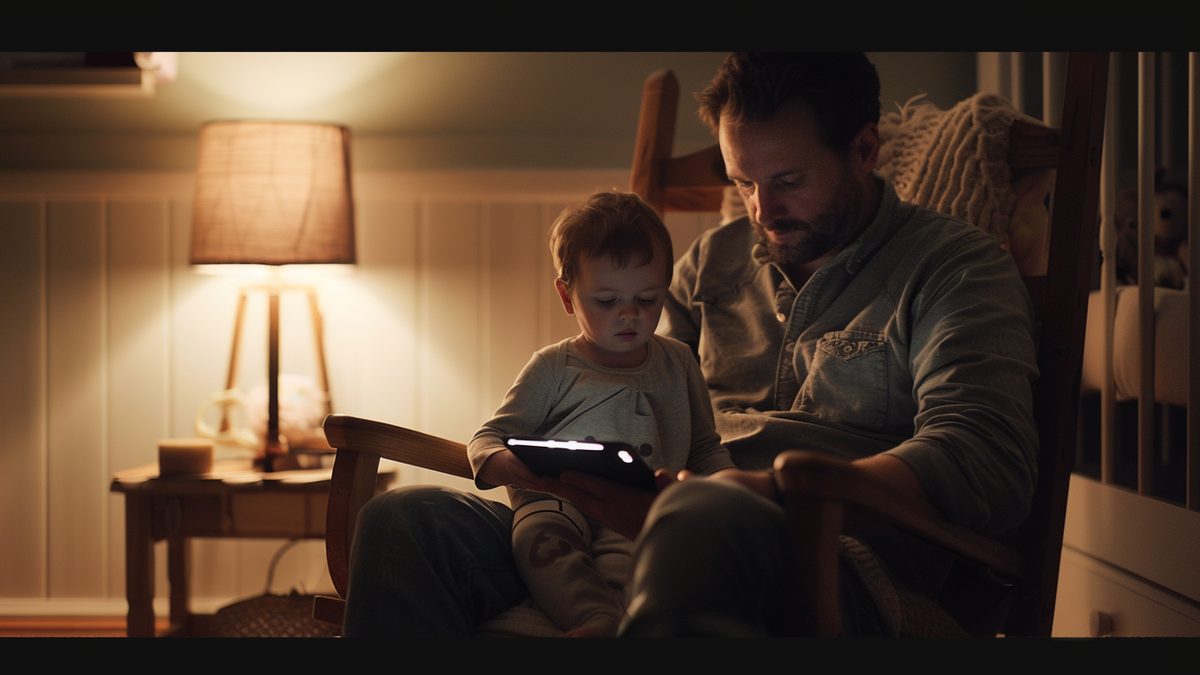
Screen Time Before Bed: What Actually Helps Kids Sleep Better
Last Updated: March 2026
If bedtime goes sideways after screens, the fix usually isn't "no screens ever"-it's how you use them. What matters most is the last 30-60 minutes: avoid high-arousal shows/games, lower the brightness, keep the device out of the bedroom, and swap the final chunk for a repeatable wind-down (bath/brush/book/bed). Consistency beats perfection.
I'm not here to shame you for using screens. I'm here to stop the nightly pattern where the iPad goes off and your kid's nervous system goes on.
Why screen time before bed messes with sleep (in normal kid terms)
There are three reasons screens are a bedtime problem. And only one of them is the "blue light" thing people love to yell about.
- Arousal: Fast shows, loud videos, and games flip the brain into "more!" mode.
- Negotiation fuel: Screens create a clean, easy-to-argue about boundary: one more.
- Light + attention: Bright screens + close viewing can make it harder to feel sleepy.
So if you're asking "is screen time before bed bad?" the real answer is: it depends. A calm, predictable show at low brightness is different than a last-minute game level with flashing lights and victory music.
The cutoff rule that actually works (even when you're tired)
The best screen cutoff is the one you can keep. Here's the simplest version:
- Little kids (toddlers/preschool): screens off 60 minutes before lights out, when possible.
- Older kids: aim for 30-60 minutes depending on how activated they get.
But if your real life doesn't allow a clean hour? Don't quit. Just make the last chunk screen-free and boring in a predictable way.
The "last 20 minutes" hack
Even if screens end late, protect the last 20 minutes like it's sacred:
- bath or quick wipe-down
- brush + pajamas
- two books (or one short chapter)
- lights out
If you need a full bedtime structure, pair this with 15-Minute Bedtime Routine That Actually Works.
What to allow if you're going to allow screens
If you're going to use screens before bed (no judgment), choose the least-exciting option available. The goal is "downshift," not "dopamine confetti."
- Slow, familiar shows (re-watches are better than new episodes)
- Audio stories with the screen off
- Nature/space videos on low volume
What to avoid (because it's basically a bedtime energy drink)
- competitive games
- fast-cut YouTube clips
- anything that ends with "next video"
- new shows with cliffhangers
How to turn screens off without the nightly war
The "screen off" moment is where dads get trapped. You either cave or you escalate. Neither is great.
Try this instead:
1) Pre-decide the end
No questions. No "okay?" Just calm certainty.
2) Add a bridge activity (same every night)
Kids don't just stop. They transition. Pick one repeatable bridge:
- pick pajamas together
- choose the first book
- race to the bathroom sink (you lose on purpose sometimes)
3) Don't reopen negotiations
If you re-negotiate once, you'll be re-negotiating forever. If bedtime negotiations are a pattern at your house, this pairs well with Toddler Won't Stay in Bed? A Dad's 3-Step Reset Plan.
Troubleshooting: "But screens are the only thing that calms them down"
I get it. Some nights you're not trying to be Parent of the Year. You're trying to end the day without a scene.
So here's the compromise that keeps sleep intact:
- Make screens a tool, not a reward. Use the same calm content at the same time.
- Dim everything. Brightness down, volume down, room lights down.
- Keep it out of the bedroom. Bedroom = sleep signal. Don't mix the cues.
- End with connection. Two minutes of "tell me the best part of today" beats another clip.
If you're living in the "overtired kid + exhausted dad" zone a lot, the bigger fix is often earlier bedtime and fewer late transitions-like the lesson I learned in The Night the Baby Wouldn't Sleep and I Stopped Fighting the Clock.
Bottom line: You don't need a perfect "no screens" household to get better sleep. You need a predictable ending: calm content (if any), a real cutoff, and the same wind-down every night. The win is not moral purity. The win is fewer bedtime fights and a kid who falls asleep without a second shift.